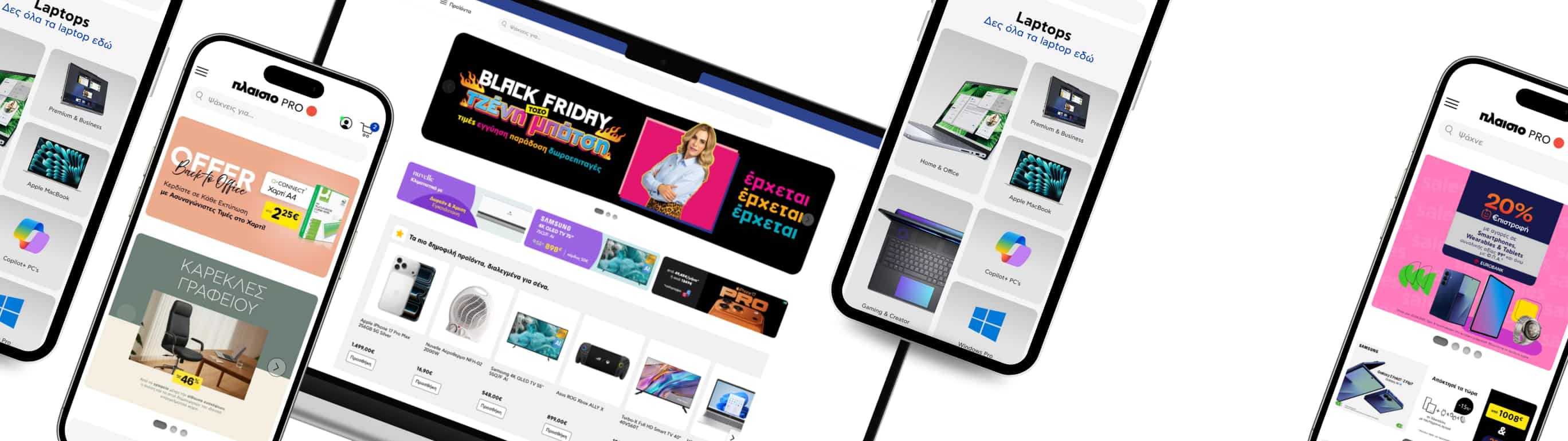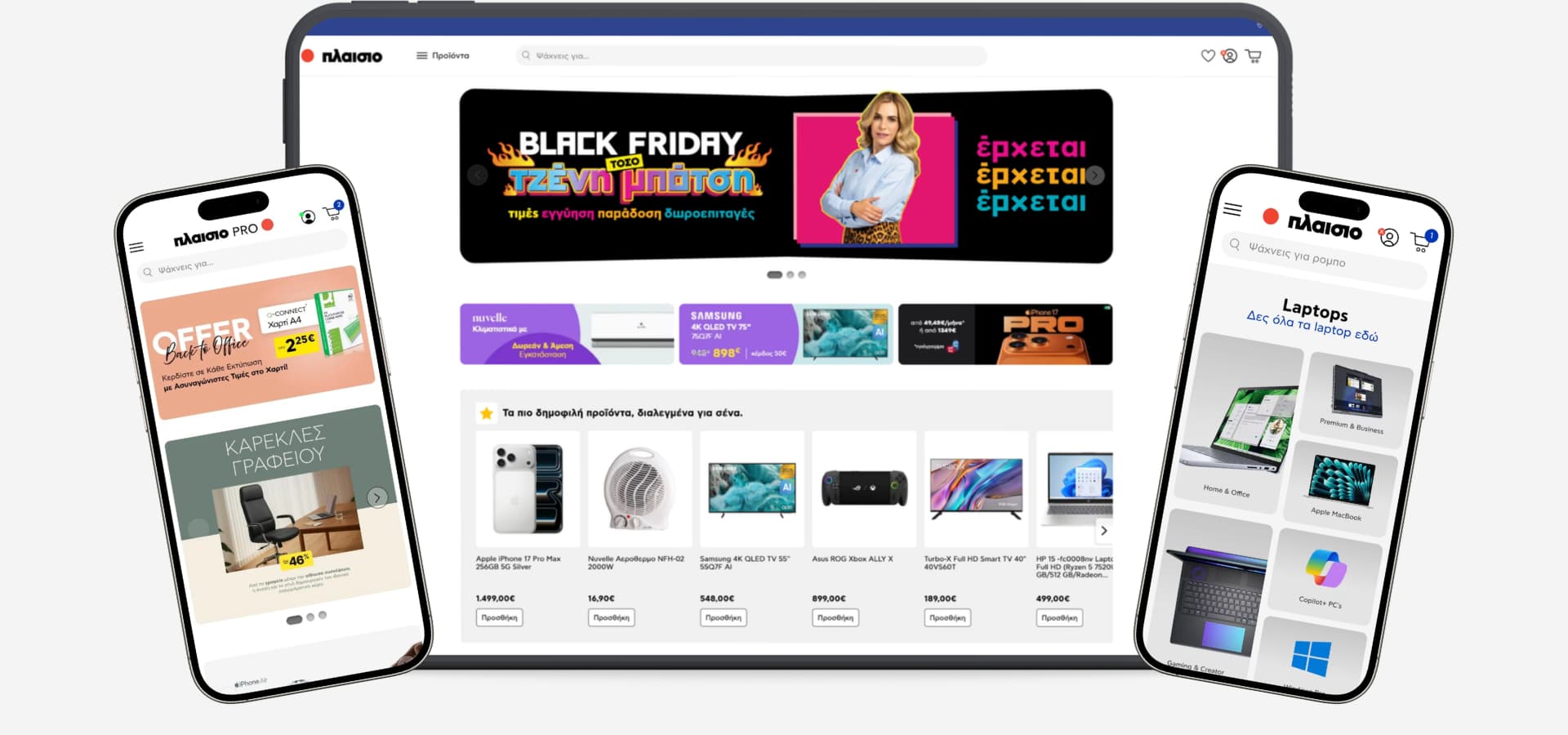
For Plaisio, we developed a new Composable Commerce platform that combines flexibility and performance. We revamped the entire platform, establishing a new webshop for both B2B and B2C. Thanks to this new platform, Plaisio saw significant commerce results.
The launch of the Composable platform with the B2B webshop resulted in:
| Adding the B2C webshop resulted in:
|
The new Composable platform immediately eliminated all bottlenecks: Plaisio can once again expand the product catalog, scale up campaigns, onboard new B2B clients, and continuously expand the platform with new functionalities. Moreover, Plaisio can now effortlessly handle peak moments without downtime, delays, or other disruptions to the customer experience.
Branche:
Retail
Customers:
50 million
Products:
Tools:
40.000
commercetools, Contentstack, Constructor, Cloudinary, Vercel, Contact Pigeon, Talon.One
Website:
“What we particularly appreciate is that Aviva did not push for a single solution, but helped us to fully understand the landscape. They brought clarity to the possibilities, explained the consequences of choices transparently, and ensured that we, as an organization, remained the owner of our platform.”
- Socrates Fotiou, Projectmanager Plaisio
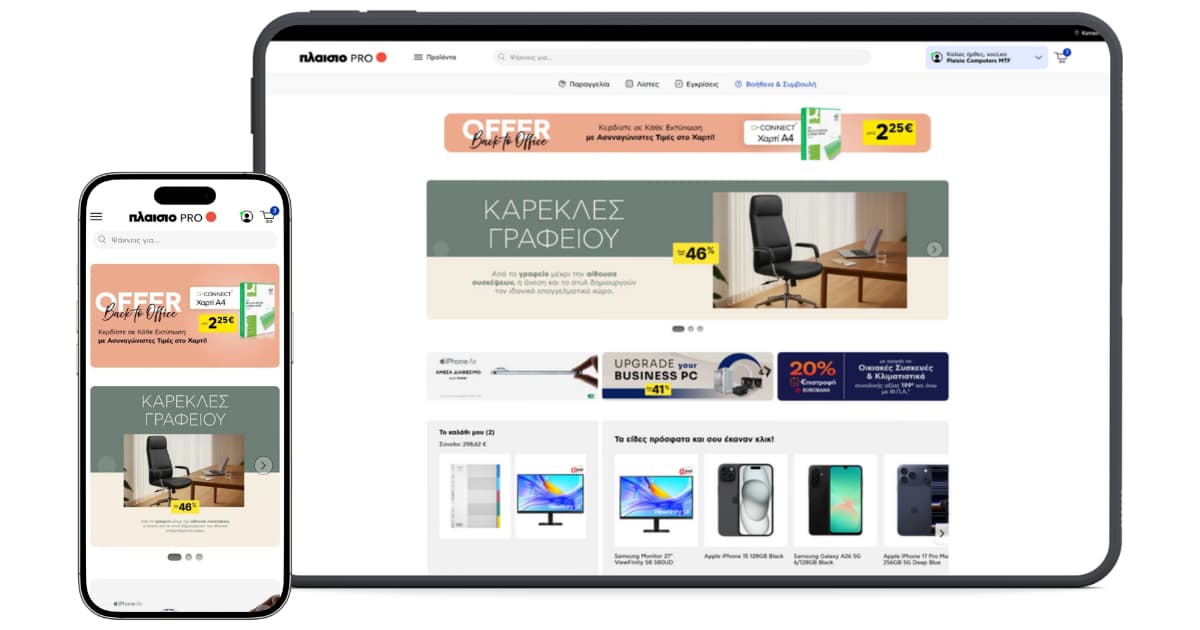
Plaisio is the market leader in Greece and Bulgaria for consumer electronics, gaming, mobile devices, office supplies, and photo and computer equipment. With 50 million visitors annually, they have a substantial customer base. Customers are assisted by 1,500 employees in 27 branches, and online via the Plaisio webshop.
Our partnership began in 2017 and grew into a strategic collaboration in which we provide structural input regarding functionality, technology, and integration with other Plaisio systems. Thanks to this strong bond of trust, we have since renewed the entire e-commerce platform, for both B2C and B2B.
Effortlessly 3.75 billion unique prices for 40,000 different products.
Check the case
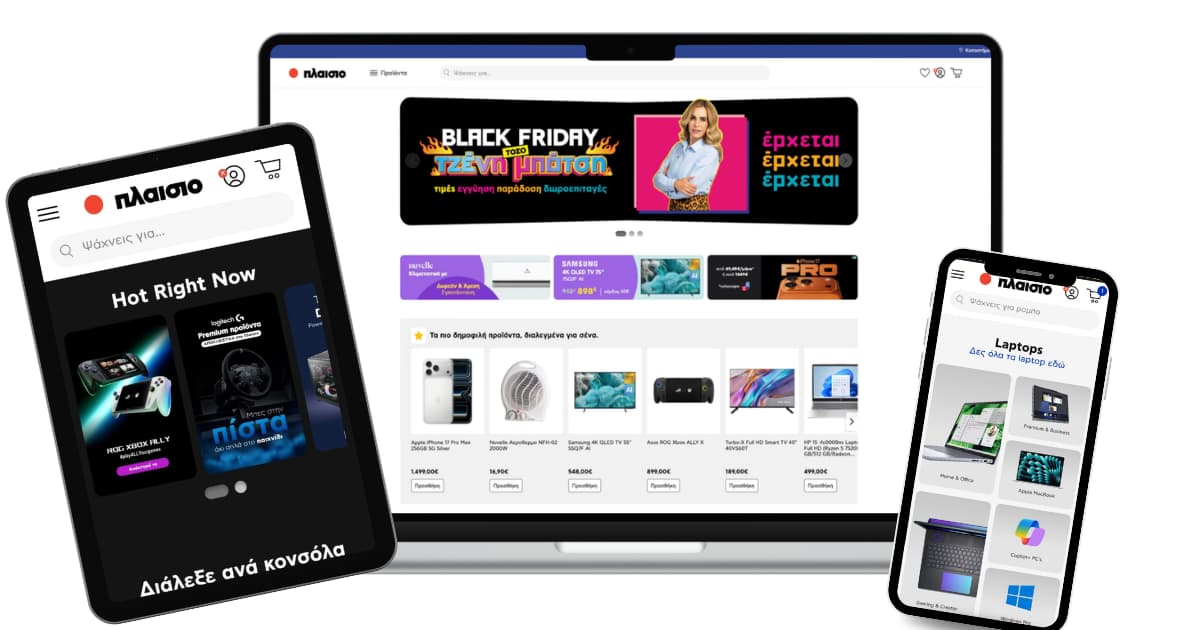
A smooth personal experience for 50 million visitors.
Check the casePlaisio was growing faster than their platform could handle. They had to keep track of more and more products, launch promotions faster, and customers expected increasing functionality and speed. To solve this, Plaisio was looking for a platform that could grow with them. They needed a solution that could handle their enormous product catalog, update product information quickly, and scale up effortlessly during peak periods such as Christmas and Black Friday. At the same time, they wanted to remain flexible: easily add new functionalities when customer expectations shift, not be tied to a single vendor, and easily expand the platform further in the future.
The challenging yet appealing aspect of a Composable platform is that it can be assembled exactly as you wish. This allows you to add precisely the services you need, ensuring your platform always fits you perfectly. As a result, you do not pay for components you never use. To do this properly, it is important to go through a well-thought-out preliminary phase.
The established requirements served as the guideline for assembling the architecture. Armed with a tight 5-phase plan and MACH Alliance best practices, we guided Plaisio through the development of their ideal platform.
"The process involved a huge amount of information and decisions. Aviva managed to bring structure and clarity. Their guidance during the service selection was not only expert but also transparent and strategically well thought-out. This helped us make the right decisions with conviction."
- Scorates Fotiou, Projectmanager Plaisio
At the start of the preliminary phase, we always discuss the wishes and requirements of the business and the IT department. To be able to elaborate on these wishes in concrete terms, we map out two types of requirements: functional requirements and technical requirements.
Functional requirements describe what a platform must do, such as providing the ability for a user to log in or enabling the user to search through a catalog. Technical requirements describe how well the platform must perform these functions. These are requirements regarding speed, security, ease of use, and scalability.
To ensure that this question is fully answered, we take into account 6 different stakeholders: the end user, the content editor, the merchandiser, the back office employee, the system administrator, and the software engineer.
Plaisio placed high demands on the replacement platform. It had to enable them to:
1. Calculate personalized prices within 100 milliseconds,
2. Process product updates within 5 minutes,
3. Process a customer order within 1 second,
4. Process 21 million page requests per month, with a peak load of 200 thousand per hour,
5. Display and efficiently manage a unique price per B2B customer, per product: 3.75 billion in total,
6. Scale up quickly to run major campaigns such as Black Friday and Back to School smoothly,
7. Replace or add services,
8. Work on maintenance easily,
9. Work less on maintenance and more on innovation.
First, we created a general overview of all components and actors in the platform. This overview is called a ‘System Overview’, and it schematically shows how components such as the CMS, commerce, and Search & Merchandising should relate to each other and who uses them.
Plaisio was looking for a platform with 6 main components: Search, Marketing, Analytics, Infrastructure, Content, and Commerce.
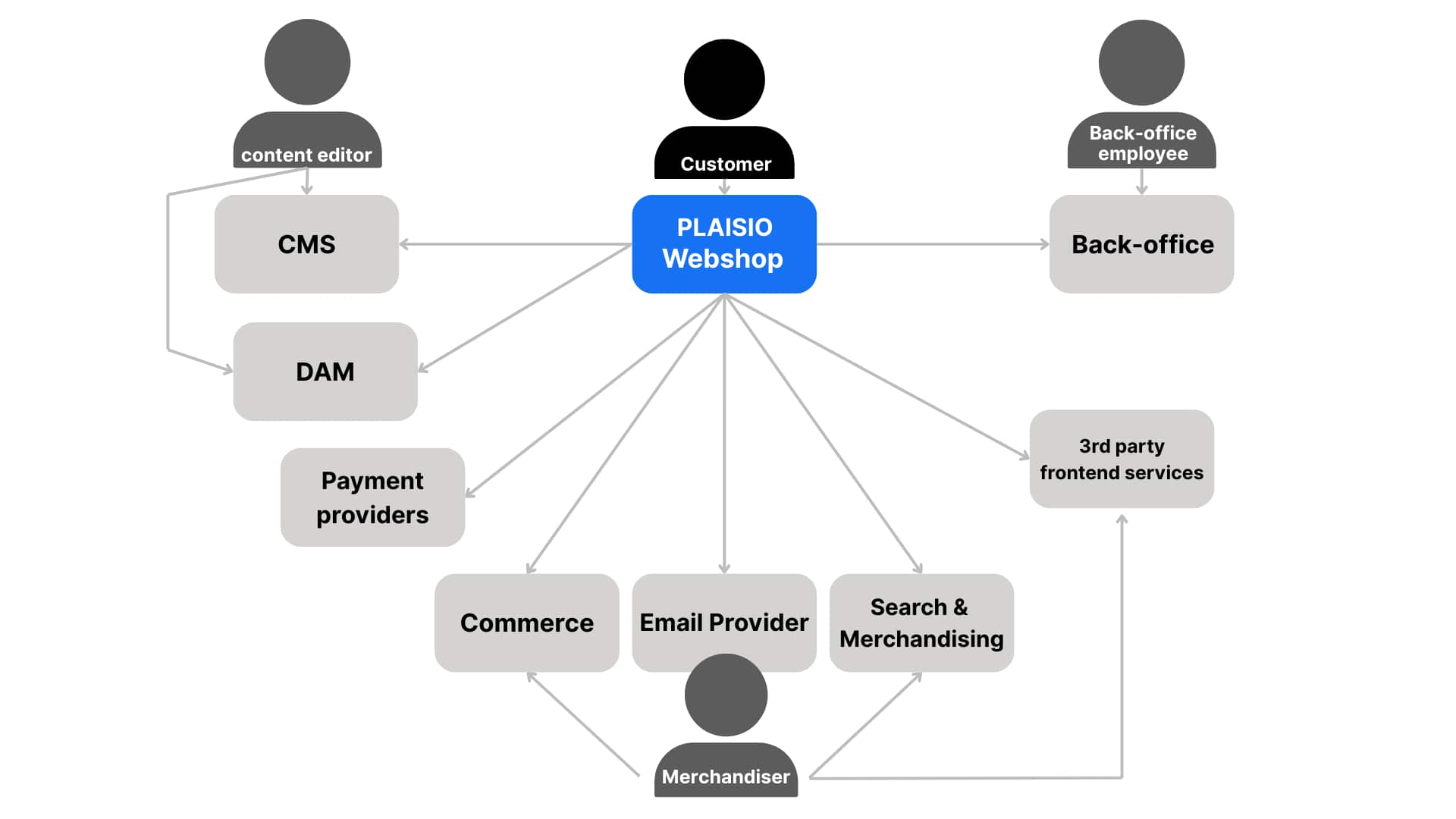
Plaisio's System Overview
To give concrete form to this, we selected components together with Plaisio based on the previously established requirements and our knowledge of the market. For each component, we prepared a comprehensive advisory report: we matched each requirement with various vendors so that we could determine exactly which service best matched Plaisio’s needs. This advice served as a guideline for Plaisio and helped them make informed decisions about their own platform. This is one of our core services: we advise and support, leaving the selection to the platform owner. This selection does not necessarily have to go through an advisory report: we also supported Plaisio in conducting a Proof of Technology and provided a direct recommendation. Plaisio subsequently chose to build the platform using Contentstack, Constructor, Cloudinary, commercetools, Vercel, Talon.One and Contact Pigeon.
We collaborated intensively with all selected services. Through weekly coordination, direct lines of communication, and a joint review of issues, we were able to guarantee that everything works together seamlessly.
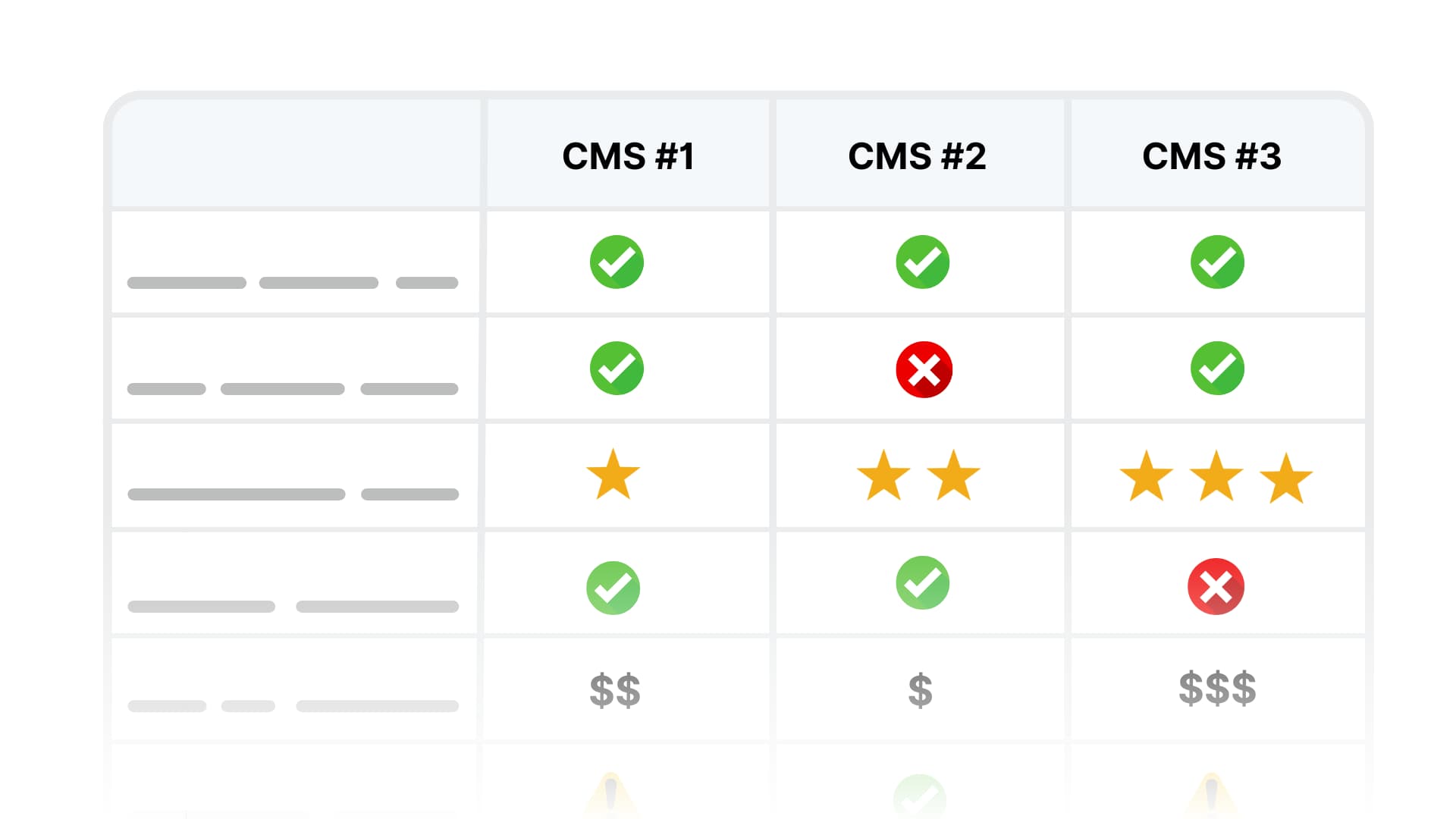
A comprehensive non-binding advisory report helps you develop your own platform.

Using the System Overview as a basis, we then took things to the next level: we zoomed in on sub-components such as the B2B pricing service and back-office synchronization, described how they work together, and thus developed the logic across the entire platform. This elaboration is therefore called the ‘Logical View’.
Using this overview, we synchronized the various services, ensuring that the different disciplines (front-end, back-end, and integration) had a strong foundation to develop a single, smoothly running platform.
The Logical Overview formed the basis for practical research: we examined how we could install the (sub)components and made a cost estimate. With a concrete cost estimate, the choice of architecture is technically and financially substantiated. This ensures that the costs for Plaisio remain predictable, even during rapid scaling or peak load.
After mapping out four phases, clear agreements were established regarding the working method and collaboration. These agreements formed a solid foundation for the development of the code, with a core value at the center: consistency.
Consistency ensures that new teams work independently and uniformly, that ad-hoc solutions are prevented, and that the entire platform remains manageable as complexity and the number of integrations increase.
After the architecture had been drawn up, we performed a crucial check: we verified that the architecture covers all requirements. We reviewed the drafted technical and functional requirements one by one and determined whether they were covered by the existing plan. And indeed, they were!
We didn't 'just start'. We divided the project into different phases, which we assessed based on effort and priority. For each phase, we ensured there was absolutely no ambiguity regarding the:
Our approach is always a living process. We continuously evaluate and use lessons learned from previous projects to further refine the approach. And that was also true for this project: by constantly evaluating, we were able to make timely adjustments and ensure that the platform continued to meet all requirements.
"At Aviva Solutions, we believe that technology is only as valuable as the results it delivers. For Plaisio, the MACH architecture we designed has not only created a future-proof platform but has also achieved impressive growth. These results are the true crowning achievement of our work."
- Joost Meijles, Software Architect at Aviva Solutions

We have been building converting e-commerce platforms for our clients for 19 years.